When (C—H) σ electrons are in conjugation to pi bond, this conjugation is known as…
Chemistry · JEE Advanced · NTA Exams — Basic Principles of Organic Chemistry
When (C—H) σ electrons are in conjugation to pi bond, this conjugation is known as hyperconjugation : For any compound to show hyperconjugation
(i) Compound should have one sp2 -hybridised carbon.
(ii) α-carbon with respect to sp2 should be sp3
(iii) α-carbon should contain at least one hydrogen atom.
No. of α-carbon \(\propto\)stability of cation and alkene.
Which of the following cations is hyperconjugation destabilized?
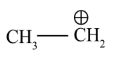
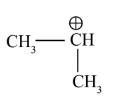
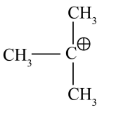
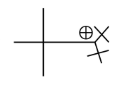
Answer
(D)
Sign up free on Edukali to view the step-by-step worked solution and practice thousands of similar questions.
Related practice questions
- array l (I) (II) (III) array Which of the following orders is correct for the stability of these carbocations…
- Which of the following will have least hindered rotation about carbon-carbon bond ?
- Assertion (A) : The two structures, CH 3 – CH 2 – CH 2 – C CH and are chain isomers. Reason (R) : The chain…
- Hyperconjugation is no bond resonance. It involves σ electrons of C—H bond. Greater the number of C — H bonds…
- CH 3 CH 2 NO 2 will show ........... isomerism
- Which of the following resonating structures of 1-methoxy-1, 3-butadiene is least stable ? (2005)
- Which of the following operations on the Fischer formula does not changes its absolute configuration?
- Which of the following alkyl benzenes has maximum electron density?
More Basic Principles of Organic Chemistry questions · Browse all practice questions