Aliphatic nucleophilic substitution is mainly of two type S N 1 and S N 2 . S N 2…
Chemistry · JEE Advanced · NTA Exams — Alkyl and Aryl Halides
Aliphatic nucleophilic substitution is mainly of two type SN1 and SN2 . SN2 reaction proceed with strong nucleophile in polar aprotic solvent 3º halides do not give SN2 reaction. Inverted products are obtained in this reaction and mechanism of reaction occurs through the formation of transition state.
SN1 reaction proceed through the formation of carbocation in polar aprotic solvent. Solvent itself acts as nucleophile in this reaction. Racemization takes place in SN1 reaction.
Which one of the following will give SN2 reaction?
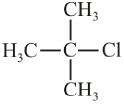
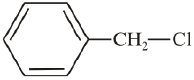
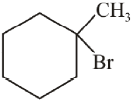
- \(\mathrm{H}_{2} \mathrm{C}=\mathrm{CH}-\mathrm{Cl}\)
Answer
(B)
Sign up free on Edukali to view the step-by-step worked solution and practice thousands of similar questions.
Related practice questions
- Which of the following phrases are correctly linked with S N 1 reaction ?
- Mark out the possible product.
- Debromination of mesodibromobutane will give the product as :
- Assertion : Wurtz’s coupling reaction of alkyl halide is not suitable for an alkane containing an odd number…
- Which of the following is (are) true regarding intermediate in the addition-elimination mechanism of the…
- Which of the following compounds will not give S N 2 reaction?
- The conversion of 2, 3-dibromobutane to 2-butene with Zn and alcohol is
- Which of the following has the highest nucleophilicity ? [2000]
More Alkyl and Aryl Halides questions · Browse all practice questions