Addition of X 2 on alkene is electrophilic addition reaction. Reaction proceed through…
Chemistry · JEE Advanced · NTA Exams — Alkyl and Aryl Halides
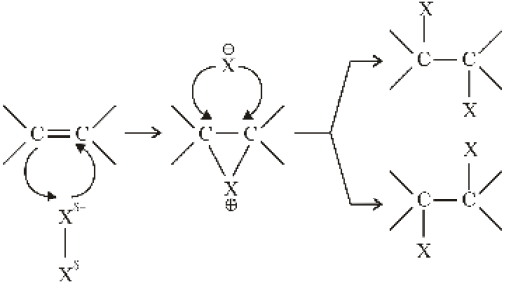
Addition of X2 on alkene is electrophilic addition reaction. Reaction proceed through the formation of 3-membered cyclic halonium ion. Nucleophile X– attacks from backside of cyclic halonium ion hence total reaction is anti addition reaction. If this reaction proceed in polar solvent then solvent itself acts as nucleophile.
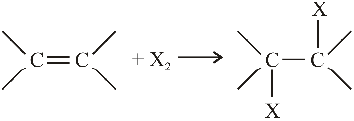
Mechanism :
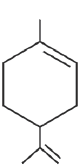 \(\xrightarrow[\mathrm{CCl}_{4}]{\mathrm{Cl}_{2} \text { (1Mole) }}\)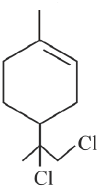
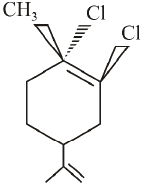
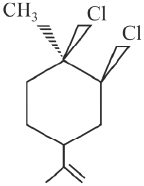
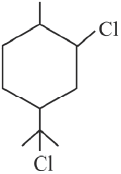
Answer
(B)
Sign up free on Edukali to view the step-by-step worked solution and practice thousands of similar questions.
Related practice questions
- An S N 2 reaction of an asymmetric carbon of a compound always gives (2001)
- Based on the above observation, which flask will have the largest amount of 1-hexene?
- Assertion : Heavy metal ions Ag + or Pb 2+ decrease S N 1 reactivity. Reason : They aid ionisation of RX.
- Among the following, the molecule with the highest dipole moment is (2003)
- Aliphatic nucleophilic substitution is mainly of two type S N 1 and S N 2 . S N 2 reaction proceed with…
- Match the reactions in List-I with the features of their products in List-II and choose the correct option…
- Mark out the possible product.
- Assertion : Tertiary haloalkanes are more reactive than primary haloalkanes towards elimination reactions…
More Alkyl and Aryl Halides questions · Browse all practice questions